2026 Construction Review: Trends That Shaped the Block Industry This Year
 admin
admin
The construction industry in 2026 didn’t just evolve, it recalibrated.
From stricter sustainability benchmarks to faster project timelines and smarter materials, this year forced developers, architects, and contractors to rethink how they build. And at the center of it all?
Blocks are no longer viewed as basic structural components. In 2026, they became strategic tools for energy efficiency, cost optimization, climate resilience, and design flexibility.
In this in-depth construction review, we break down the most important trends that shaped the block manufacturing and construction landscape this year and what they mean for contractors, developers, and infrastructure planners moving forward.

1. Sustainable Concrete Blocks Moved From “Option” to “Standard”
If 2024 and 2025 were about sustainability discussions, 2026 was about implementation.
Government mandates, ESG compliance requirements, and green building certifications (LEED, IGBC, GRIHA) pushed sustainability to the forefront. Developers were no longer asking if blocks were sustainable. They were asking:
What is the embodied carbon per block?
Is fly ash or slag content optimized?
Can this product contribute to green building credits?
Is the manufacturing process energy efficient?
What Changed in 2026?
Increased demand for fly ash concrete blocks
Greater acceptance of low-carbon cement blends
Preference for locally manufactured masonry units
Reduced reliance on traditional clay bricks due to environmental concerns
Concrete block manufacturers that optimized raw material sourcing and production efficiency saw a clear competitive edge.
Why It Matters
Concrete masonry blocks now directly influence:
Operational energy savings
Lifecycle carbon footprint
Thermal efficiency ratings
Long-term maintenance costs
In short: sustainability became a measurable construction metric, not a marketing claim.
2. Speed of Construction Became a Primary Decision Factor
Time is money. But in 2026, time became survival.
With financing costs fluctuating and urban projects accelerating, developers prioritized materials that could reduce construction timelines.
Why Blocks Gained Popularity
Compared to conventional brickwork, high-quality concrete blocks offer:
Faster installation
Uniform sizing
Reduced mortar consumption
Lower curing time
Easier alignment and stacking
For large-scale projects like:
Residential complexes
Warehouses
Industrial sheds
Institutional buildings
Concrete masonry blocks helped shave weeks and sometimes months off project schedules.
The Big Shift
Contractors increasingly selected suppliers not just on price, but on:
Production capacity
On-time delivery
Batch consistency
Quality certification
The block industry had to become more agile and supply-chain optimized to keep up.
4. Infrastructure Expansion Fueled Demand for High-Strength Blocks
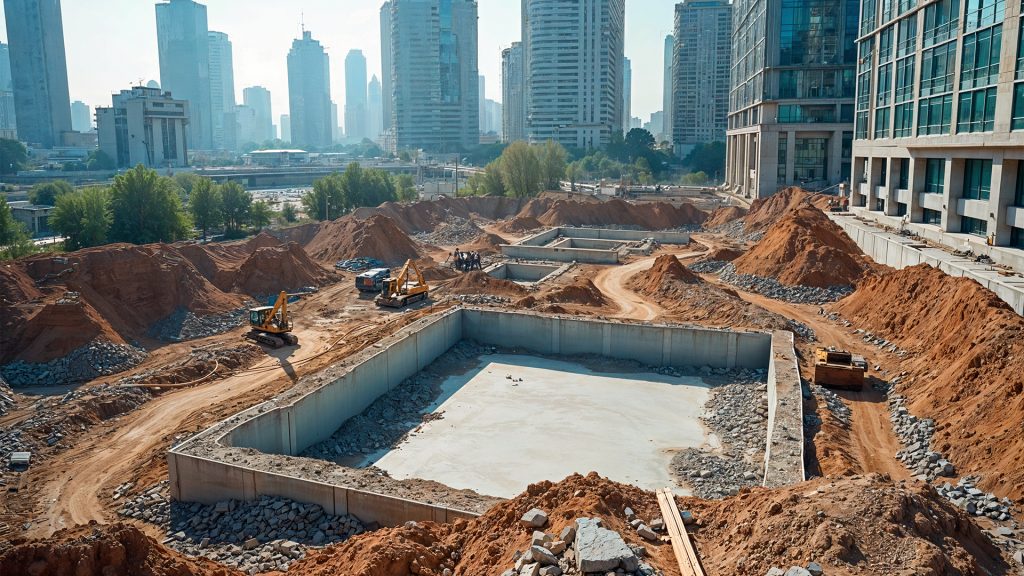
2026 saw aggressive infrastructure development across multiple regions:
Highway corridors
Logistics hubs
Metro rail projects
Industrial clusters
Affordable housing schemes
All of which required high compressive strength concrete blocks.
Key Observation
Structural reliability became non-negotiable.
Project consultants increasingly demanded:
Verified compressive strength reports
Third-party lab certifications
IS code compliance
Quality control documentation
Manufacturers that invested in automated batching and curing systems gained credibility and long-term contracts.
5. Cost Optimization Replaced Cost Cutting
Developers in 2026 were smarter about budgeting.
Instead of chasing the lowest price per block, they evaluated:
Cost per square foot of walling
Labor efficiency
Mortar consumption
Structural reinforcement requirements
Long-term durability
Why This Matters
Concrete blocks often proved more economical than clay bricks when viewed holistically.
Lower breakage rates.
Reduced plaster thickness.
Faster installation.
Minimal wastage.
This shifted conversations from “price comparison” to “value engineering.”
6. Automation Transformed Block Manufacturing
Behind the scenes, 2026 was a breakthrough year for manufacturing technology.
Leading block manufacturers adopted:
Fully automated batching plants
Precision vibro-compaction systems
Controlled curing chambers
Real-time quality monitoring
Result?
Improved dimensional accuracy
Higher compressive strength consistency
Lower rejection rates
Faster production cycles
Automation allowed manufacturers to meet rising demand without compromising quality.
7. Urbanization Increased Demand for Space-Efficient Solutions
With cities expanding vertically, space optimization became critical.
Developers preferred:
Thinner yet strong wall systems
Load-bearing block structures
Modular layouts
Concrete masonry blocks offered flexibility in design while maintaining structural integrity.
Particularly in:
Mid-rise residential buildings
Commercial office spaces
Affordable housing projects
Block walls helped optimize carpet area without sacrificing durability.
8. Climate Resilience Entered the Conversation
Flooding, extreme heat, and unpredictable weather patterns impacted project planning this year.
Concrete blocks gained attention for:
Fire resistance
Moisture resistance
Termite resistance
Long-term durability
In coastal and high-humidity zones, durability became a decisive factor.
2026 proved that resilience is no longer optional in construction materials.
9. Regulatory Compliance Tightened
Building codes became stricter.
Municipal approvals increasingly required:
Structural certifications
Environmental documentation
Material test reports
Block manufacturers that aligned with IS standards and quality benchmarks found smoother entry into institutional and government projects.
10. Shift Toward Integrated Construction Partnerships
One subtle but powerful trend of 2026:
Developers sought long-term supplier partnerships instead of transactional purchasing.
They looked for:
Technical guidance
Project-specific block recommendations
On-site support
Bulk supply consistency
Block manufacturers evolved into solution providers rather than just product vendors.
What These Trends Mean for 2027
If 2026 was about adaptation, 2027 will be about acceleration.
Here’s what we anticipate:
Greater push for carbon-neutral block manufacturing
Increased adoption of lightweight concrete blocks
Smarter supply chain digitization
More focus on lifecycle cost evaluation
Continued infrastructure-led growth
The construction sector is becoming more performance-driven. And concrete blocks are central to that evolution.
The Year Blocks Proved Their Strategic Value
2026 reinforced one critical truth:
Concrete blocks are no longer a commodity, they are a performance asset.
From sustainability to speed, from strength to scalability, blocks played a defining role in shaping this year’s construction landscape.
At Ducon Industries, we’ve seen firsthand how evolving demands are transforming the way projects are planned and executed. As the industry moves toward smarter, greener, and faster construction practices, high-quality concrete masonry solutions will continue to be foundational to progress.
Looking Ahead
If you’re planning a residential, commercial, or infrastructure project, now is the time to evaluate:
Material performance
Supplier reliability
Sustainability compliance
Long-term structural efficiency
Because in modern construction, the right block doesn’t just build walls.
It builds advantage.