7 Powerful Differences Between Hollow Blocks vs Solid Blocks

7 Powerful Differences Between Hollow Blocks vs Solid Blocks

Uncategorized

Hollow Blocks vs. Solid Blocks

Hollow blocks are better for most construction projects because they are lighter, more cost-effective, and provide better thermal and sound insulation.
Solid blocks are better only for load-bearing and structural applications where maximum strength is required.

In short:
Use hollow blocks for walls and partitions.
Use solid blocks only where structural loads demand it.

Choosing the wrong concrete block can increase construction costs, reduce efficiency, and create long-term structural problems.

That’s why professionals frequently ask:

Hollow blocks vs solid blocks: which is better for your project?

In this expert guide, you’ll discover:

  • The real-world differences between hollow and solid blocks
  • Which block is stronger, cheaper, and more efficient
  • When engineers recommend each type
  • A clear verdict so you don’t overbuild or overspend

What Are Hollow Blocks?

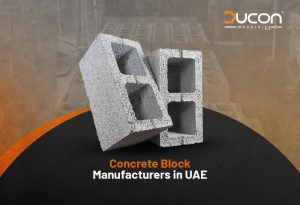
Hollow blocks are concrete masonry units with internal cavities designed to reduce weight while maintaining strength.

Why Hollow Blocks Are Widely Used

  • Lightweight and easy to handle
  • Faster installation
  • Better thermal insulation
  • Better sound insulation
  • Reduced dead load on foundations

Hollow blocks are commonly used in:

  • Residential buildings
  • Partition walls
  • Boundary walls
  • Low- to mid-rise structures

Manufacturers like Ducon Industries produce hollow blocks that comply with UAE construction standards, ensuring consistent strength and dimensional accuracy.
 https://duconind.com

What Are Solid Blocks?

Solid blocks are dense concrete blocks with little to no voids. They are designed for maximum strength and load-bearing performance.

Why Solid Blocks Are Used

  • Higher compressive strength
  • Excellent load-bearing capacity
  • Greater durability in high-stress areas

Solid blocks are typically used in:

  • Load-bearing walls
  • Foundations and basements
  • Retaining walls
  • Industrial structures

Hollow Blocks vs Solid Blocks: Key Differences

Hollow block vs solid block in UAE - Ducon industries
  1. Weight & Handling

  • Hollow blocks: Lightweight, easier to transport and install
  • Solid blocks: Heavy, require more labor effort

2. Strength & Load-Bearing Capacity

  • Hollow blocks: Suitable for non-load-bearing and partition walls
  • Solid blocks: Ideal for load-bearing and structural walls

Engineer insight:
Use solid blocks only where structural loads demand it.

3. Cost Comparison

  • Hollow blocks: Lower material, labor, and transportation costs
  • Solid blocks: Higher cement content = higher overall cost

For large projects, correct block selection can reduce construction costs by 15–25%.

Contractors often consult Ducon Industries to optimize block usage without compromising safety.
https://duconind.com

4. Construction Speed

  • Hollow blocks: Faster installation due to lighter weight
  • Solid blocks: Slower installation

This makes hollow blocks ideal for projects with tight timelines.

5.Thermal Performance (Critical in UAE Climate)

  • Hollow blocks: Better heat insulation due to air cavities
  • Solid blocks: Poor thermal insulation

Better insulation means:

  • Lower cooling costs
  • Improved indoor comfort

6. Sound Insulation

  • Hollow blocks: Absorb sound more effectively
  • Solid blocks: Transmit sound more easily

This makes hollow blocks better for:

  • Homes
  • Offices
  • Schools
  • Hospitals

7. Application Suitability

  • Hollow blocks: Walls, partitions, villas, boundary walls
  • Solid blocks: Foundations, columns, industrial walls

When Should You Choose Hollow Blocks?

Choose hollow blocks if your project prioritizes:

  • Cost efficiency
  • Faster construction
  • Thermal and sound insulation
  • Residential or commercial walls

They are the preferred solution for most modern buildings.

When Should You Choose Solid Blocks?

Choose solid blocks if your project requires:

  • High load-bearing strength
  • Structural safety in critical areas
  • Industrial or heavy-duty applications

Final Verdict: Hollow Blocks vs Solid Blocks

There is no single “better” block. Only the right block for the right purpose.

  • Hollow blocks → Best for efficiency, insulation, and cost
  • Solid blocks → Best for strength and structural support

Smart construction isn’t about using more material.
It’s about using the right material.

For expert guidance and UAE-standard concrete products, partner with Ducon Industries.
 https://duconind.com

Outdoor kitchen structures often rely on the same masonry principles discussed in this outdoor kitchen essentials guide.

 https://www.duconodl.com/blog/outdoor-kitchen-essentials/

Frequently Asked Questions

1. Are hollow blocks strong enough for construction?

Yes. Hollow blocks are suitable for most walls when used according to approved building standards.

2. Which is cheaper: hollow blocks or solid blocks?

Hollow blocks are generally more cost-effective due to reduced material and labor costs.

3. Can hollow blocks be used for load-bearing walls?

Typically no, unless reinforced and designed by a structural engineer.

4. Which block is better for UAE weather conditions?

Hollow blocks perform better due to superior thermal insulation.

5. Why Choose Ducon Industries?

  • UAE-standard manufacturing
  • Consistent quality & dimensions
  • Products for residential, commercial & industrial projects

Explore concrete block solutions: https://duconind.com